The Stockholm electrical phenomenon
Handling the UndeadThe Stockholm electrical phenomenon is an invisible electrical field that intensifies across Stockholm, disrupting appliances and inflicting severe pain before stopping suddenly. Its force is registered both in the city’s malfunctioning electrical systems and in people’s bodies: lamps remain lit, plugs spark when pulled, and headaches build until the pressure simply disappears.
Background and Escalation
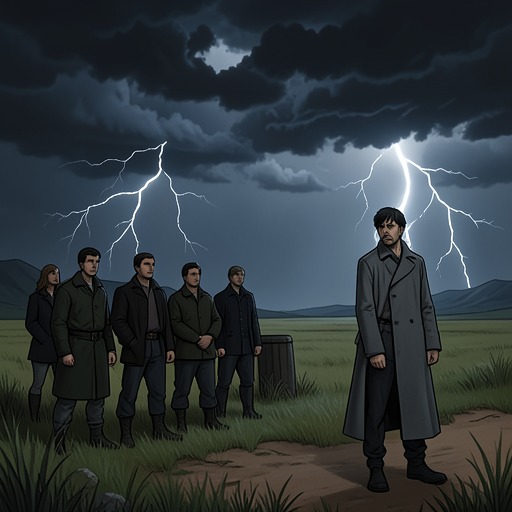
At first the sensation resembles an approaching thunderstorm, although the sky is clear and offers none of the usual signs or promise of relief. The tension in the air grows gradually, almost imperceptibly, until it becomes unbearable. The field itself cannot be touched, but its presence is broadly felt; people passing along a Stockholm street lower their heads, and some press their hands to their temples.
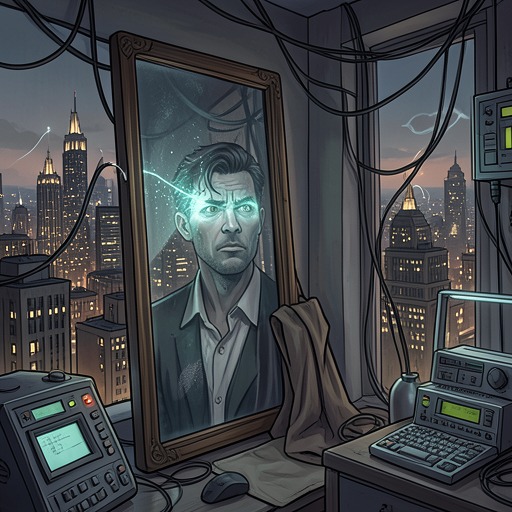
By around nine o’clock, the disturbance has become an electrical reversal of ordinary control. Lamps cannot be switched off, and appliances refuse to power down. Pulling a plug does not break the circuit: crackling and sparks leap between the plug and outlet. The field continues to strengthen, making the failure of familiar controls feel less like an isolated malfunction than a citywide condition. The precise source of the anomaly is not identified in these scenes; what is clear is that the electrical tension keeps increasing even as people wait for it to pass.
Effects on the City and Its Inhabitants
The phenomenon turns routine electrical equipment into a source of sustained disruption. In the kitchen at the club where David is waiting, the chefs have switched on the fans to lessen the heat from cooking ranges that cannot be turned off. The fans, too, cannot be stopped. Their roar makes conversation difficult, even as they provide some relief from the heat. The same anomaly thus worsens the conditions it is meant to mitigate: equipment remains in operation, and people must adapt around it.
Other signs spill into the street. An ambulance passes with its sirens sounding; it may be responding to a call, or its siren may itself be impossible to switch off. Parked cars idle in place. At ten o’clock, a radio report says the electrical phenomenon appears confined to the Stockholm region and that current in some areas can be compared to an incipient lightning strike. David feels the hairs on his arms rise, though he cannot tell whether this is a shiver or static electricity. The report gives the disturbance a regional boundary without making it any easier to explain.
The field also registers as bodily pain rather than merely as equipment failure. One man experiences it as an electric fence around his head, pulsing with shocks; the pain becomes so extreme that he expects his head to cave in. In another encounter, Flora and Elvy are struck by an intensifying headache and a sudden force that seems to pass through and surround them. Neither needs to see the garden change: no leaf moves and no blade of grass bends, yet both stagger. The event’s physical effects are therefore not limited to what can be measured in lights, plugs, or motors. It reaches people as an invasive pressure, while leaving the visible landscape apparently undisturbed.
Cessation and Significance
The phenomenon does not subside by degrees. For the man enduring the worst of the headache, a brief ping is followed by the field’s disappearance, as if a switch has been thrown. The headache vanishes and the imagined swarm of bees stops at once. Elvy’s experience ends in the same abrupt register: after struggling to move and speak, she finds that the pain has switched off, the world has returned to its normal colours, and she can breathe with relief. Flora is present beside her, and their shared ordeal matters precisely because neither has to conclude that she experienced it alone.
These sudden endings sharpen the contrast with the gradual build-up. The invisible pressure has seemed to spread through streets, appliances, and bodies without a visible storm or single identifiable cause; its release is immediate but no more explained than its arrival. The event connects a localized electrical crisis, first heard about on the radio as confined to Stockholm, with a simultaneous-seeming human experience of pain and force. Its defining reversal is practical as well as bodily: what could not be switched off stops, and what had seemed on the verge of an unbearable climax gives way to ordinary sensation.